


It is easy to judge hair care by the initial feeling. The hair becomes soft, shiny, and manageable immediately after showering. The fingers glide more easily through the lengths, and the hair feels easier to detangle.
But the immediate feeling does not always tell the whole story.
Many hair care products are primarily designed to create a quick cosmetic result. The hair should feel clean, smooth, and shiny right after the first use. This is, of course, an important part of hair care. No one wants to use a shampoo that leaves the hair rough or a conditioner that makes no noticeable difference.
The problem arises when the cosmetic effect becomes the sole purpose of the formula.
A shampoo, for example, may use stronger cleansing agents to effectively remove oil, dirt, and buildup. To prevent the hair from feeling dry or rough afterward, softening and conditioning ingredients are then added to quickly restore a smoother feel.
The result may feel very good immediately, but that does not automatically mean the product is thoughtfully designed for both the hair and the scalp in the long term.
It is difficult to understand what an ingredient list actually says
More and more people have begun to take an interest in what hair care actually contains. Many try to avoid sulfates, silicones, and other ingredients that are perceived as too harsh or that can make the hair heavy with repeated use.
At the same time, an ingredient list is rarely easy to interpret.
A long list does not automatically mean the product is more nourishing. A short list does not mean it is bad either. What matters is what functions the ingredients have and how they work together.
A product may contain several substances that provide glide, shine, and softness without including particularly much that is chosen with the scalp's environment, the hair's moisture balance, structure, or fullness in mind.
It is therefore entirely possible for a shampoo to feel nourishing without long-term care having been the primary starting point when the formula was created.
When harsh cleansing needs to be compensated
Sulfates are often used in shampoos because they cleanse effectively and create a rich lather. For many, they work without major problems, but for others, harsher cleansing can be too much.
When the scalp is cleansed more than it needs, it can begin to feel tight, dry, or irritated. Some experience itching, while others find that their hair gets greasy faster and therefore needs to be washed more often. The lengths may also feel dry and tangled.
To improve the feel, silicones, cationic polymers, and other softening agents are often added to reduce friction and make the hair easier to detangle.
These ingredients have a function. Reducing friction is important because hair that is easier to detangle is also subjected to less mechanical wear.
But it becomes a shortcut when the formula first cleanses unnecessarily harshly and then needs to put back a cosmetic feeling of softness.
For us, therefore, care does not begin after cleansing. It begins with how the hair and scalp are cleansed from the start.
The scalp must not become an afterthought
Hair care is often marketed based on what is visible in the lengths. Shine, softness, less frizz, and a manageable feel are results that are noticeable immediately.
But the hair does not start in the lengths. It starts in the scalp.
A scalp that often feels itchy, dry, greasy, or unbalanced does not create the best conditions for hair that feels healthy. Despite this, the scalp is often treated as an afterthought in many shampoo formulations.
A shampoo should, of course, cleanse, but we think it should also be able to do more than just remove oil and dirt. That is why we have developed different shampoos for different needs, instead of creating multiple versions of the same formula with new scents and colors.
Every shampoo has a clear purpose
We have built our shampoos around a milder cleansing base and at the same time given each formula its own clear focus.
Our Ginger & Lemon Shampoo is developed for intensive repair and long-term care of dry, brittle, and damaged hair. Eucalyptus & Tea Tree is our extra mild variant for sensitive, dry, and itchy scalp, while Rosemary & Caffeine focuses on hair growth, volume, and fullness.
Common to all three is Sodium Cocoyl Isethionate, a milder cleanser that provides a rich and creamy lather without the formula needing to be built around traditional sulfate bases. Then, each shampoo has been complemented with ingredients that suit the need the product was created for, such as hydrolyzed baobab protein, eucalyptus and tea tree, as well as rosemary oil, caffeine, rice protein, and plant extracts.
A working formula also needs ingredients for structure, stability, the right pH, and safe preservation. The difference is that our shampoos are not just meant to cleanse and provide a good feeling for the moment. The entire formula should be thoughtfully designed based on what the hair and scalp actually need.
The same thinking lies behind our conditioners
A conditioner needs ingredients that soften the hair, reduce friction, and make it easier to detangle. That is the foundation of a working conditioner.
But many conditioners stop at a relatively simple base of water, fatty alcohol, and a conditioning agent. This can give a good immediate effect, but we wanted to create something more complete.
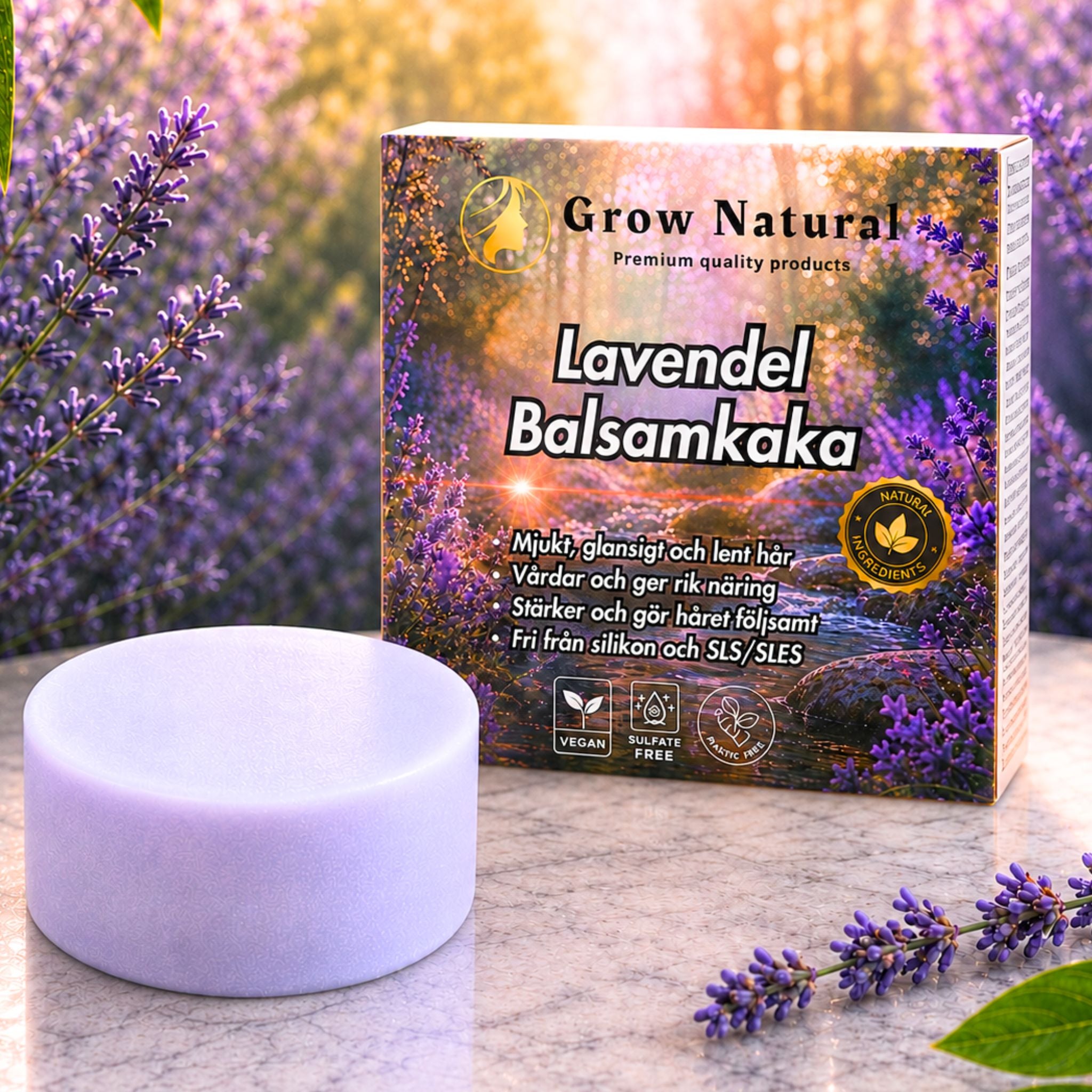
That is why our Lavender Conditioner contains, among other things, shea butter, coconut fat, sweet almond oil, argan oil, and castor oil. The different fats and oils contribute to softness, shine, and manageability in the lengths. Glycerin helps bind moisture, and hydrolyzed rice protein contributes structure and fullness.
The conditioner's effect therefore does not rely solely on a conditioning agent that makes the hair slippery. The formula combines the necessary detangling effect with lipids, moisture, and protein.
This is how we see the difference between just creating a soft surface and building a formula where several different types of care work together.
More concentrated hair care
Traditional liquid shampoos and conditioners often consist largely of water. Water is needed to create a liquid product and make it easy to distribute from a bottle.
In a solid hair care product, you instead add most of the water yourself in the shower.
This makes the product more concentrated and means that a larger part of the content can consist of ingredients that cleanse, nourish, condition, or build the product's structure.
This is also one of the reasons that a small bar can last for so many uses. You do not transport and store a large amount of water in a bottle, but activate the concentrated product directly in the wet hair.
Good hair care should both feel good and nourish
We do not believe that you need to choose between a clear cosmetic result and a thoughtfully designed formula.
A shampoo may gladly lather richly. A conditioner should make the hair soft and easy to detangle. The hair may feel fuller, shinier, and more manageable immediately after use.
But the immediate feeling should not be the only thing the product offers.
For us, long-term hair care is about starting with a milder cleansing, taking the scalp seriously, and using ingredients that contribute moisture, lipids, protein, and structure.
It is not enough for the hair to feel nourished during the first few minutes after showering. We want the entire formula to be worth using, wash after wash.







Share and get 15% off!
Simply share this product on one of the following social networks and you will unlock 15% off!